As AI becomes more capable, an important question is emerging across the insurance industry:
How much decision-making should we actually give to AI?
AI can already support many parts of the insurance workflow. But insurance decisions can involve context, complexity and professional judgment.
The opportunity may not be to automate every decision.
It may be to create the right division of work between AI and humans.
What AI can do well
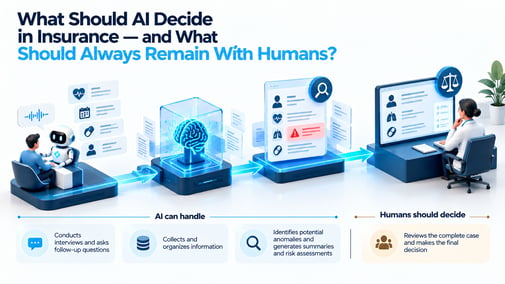
AI can take on many repetitive and information-intensive tasks, such as:
- Conducting underwriting interviews
- Asking relevant follow-up questions
- Collecting and organizing information
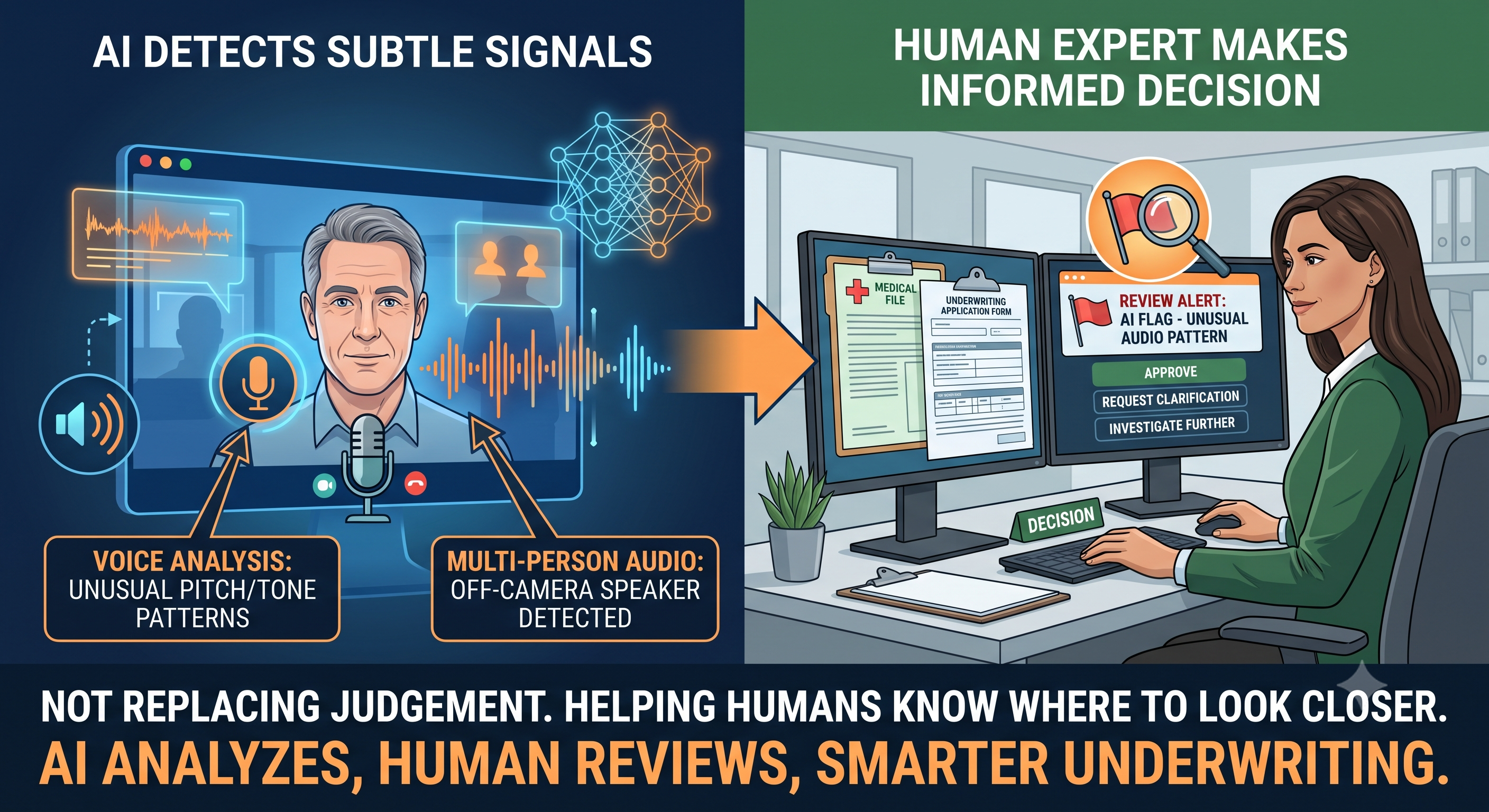
- Identifying potential anomalies
- Generating summaries
- Providing risk assessments
- Highlighting information that may require further review
These capabilities can help reduce the amount of manual information-gathering required from insurance professionals.
Where human expertise matters
Insurance decisions don't always fit neatly into predefined rules.
A medical underwriting case, for example, may contain multiple pieces of information that need to be considered together.
The medical expert may need to interpret the applicant's responses, medical history, supporting documents and other available information before reaching a decision.
This is where human expertise can remain central.
A human-in-the-loop model
Instead of asking whether AI or humans should make insurance decisions, a more practical question may be:
What should each do?
A possible model is:
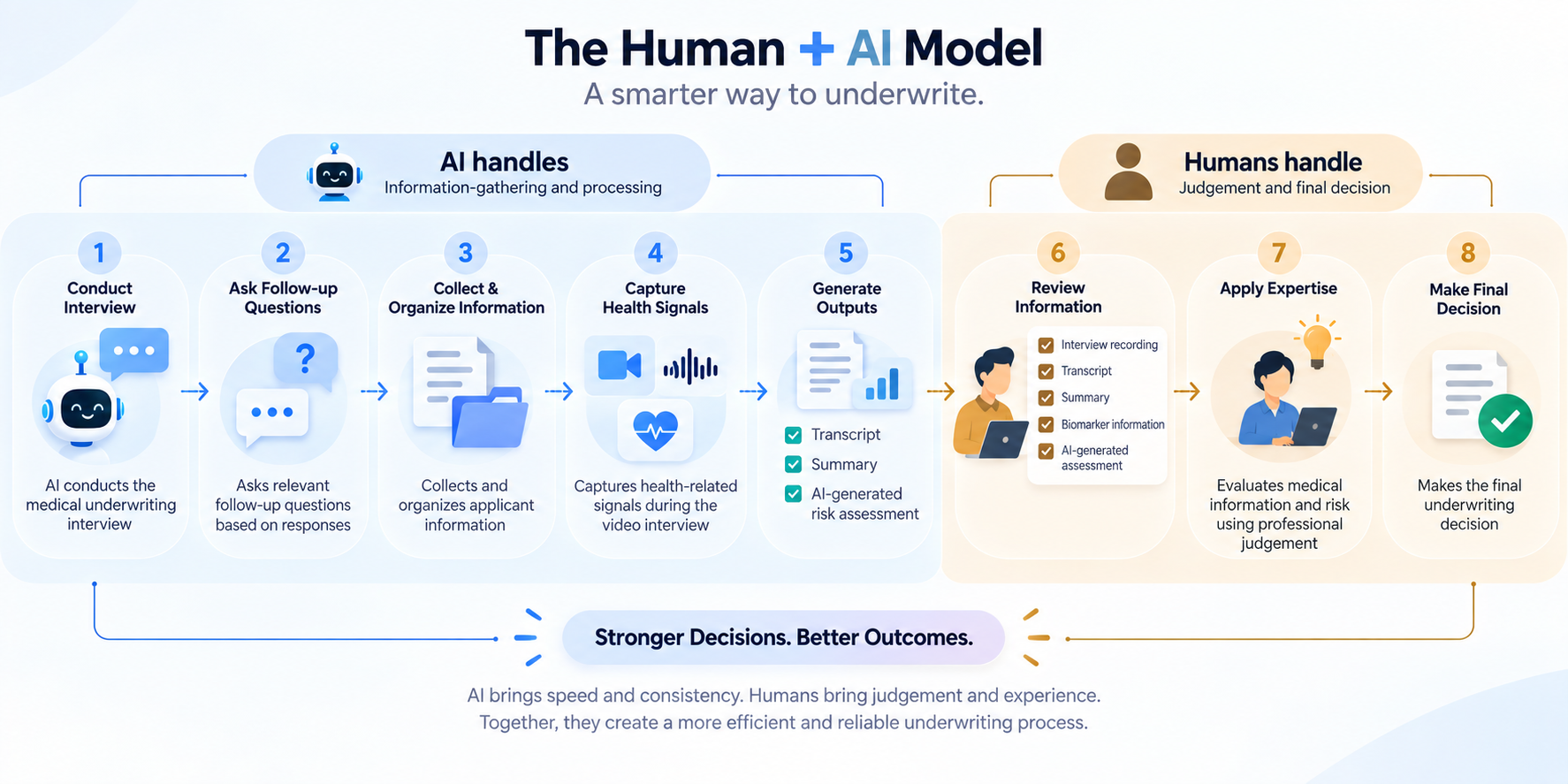
AI collects.
Gather information through interviews, documents and other available sources.
AI analyses.
Identify patterns, organize information and generate summaries.
AI highlights.
Surface potential anomalies, missing information or areas that may require closer attention.
Humans decide.
Review the complete case, apply professional judgment and make the appropriate decision.
Medical underwriting as an example
Consider an AI-powered medical underwriting interview.
AI can conduct the interview, ask relevant follow-up questions and organize the responses.
After the interview, the medical expert could receive a consolidated view containing:
- Interview responses
- Transcript
- Relevant medical information
- Supporting documents
- Health-related information
- AI-generated risk assessment
- Potential areas requiring further review
The expert can then review the complete case and make the final underwriting decision.
This approach allows AI to handle much of the information collection and analysis, while keeping professional judgment at the center of the final decision.
The goal isn't to automate everything
AI doesn't necessarily need to replace every human decision.
The bigger opportunity may be to automate what AI does well while preserving human judgment where it matters most.
The future of insurance may therefore be less about AI vs. humans and more about AI + human expertise.
AI collects.
AI analyses.
AI highlights.
Humans decide.
That balance could help insurers build processes that are more efficient while keeping expertise and accountability at the center.