For years, health and life insurance underwriting has relied heavily on questionnaires to collect information from applicants. They provide structure and help insurers gather important details about medical history, lifestyle, existing conditions and medications. But as insurance becomes increasingly digital, an important question arises: Is asking every applicant the same fixed set of questions really enough to understand their health?

A questionnaire follows a predefined path. If an applicant provides an unexpected or important answer, there may be limited scope to explore it further. The process can become more about completing questions than understanding the applicant.
Consider a simple example. An applicant says they smoke. A traditional questionnaire may record this as a "Yes" and move on to the next question. But understanding the risk may require more context. How frequently do they smoke? For how many years? Has their consumption changed? What type of tobacco or nicotine do they use?
This is where the difference between asking questions and having a conversation becomes important.
A conversation is dynamic. One answer can influence the next question. If an applicant mentions a medical condition, medication or lifestyle habit, the system can ask relevant follow-up questions before moving forward.
The objective isn't to ask more questions. It is to ask the right questions at the right time.
This is where conversational AI can bring a significant change to underwriting. Instead of simply digitizing an existing questionnaire, AI can conduct a structured interview while dynamically adapting to the applicant's responses. It can follow predefined underwriting goals and identify when additional information may be required.
For example, if an applicant mentions a history of hypertension, the system can explore relevant details such as when it was diagnosed, whether medication is being taken and whether the condition is currently being managed. The exact questions would depend on the insurer's underwriting requirements, but the principle remains the same: the conversation responds to the disclosure rather than simply recording it.
This approach can also reduce the possibility of missed follow-up questions. In lengthy underwriting interviews, manually remembering every relevant follow-up can be challenging. A conversational AI system can consistently apply predefined question logic across different applicant responses.
The benefit isn't limited to information collection. Once the interview is complete, AI can organize the responses into a structured format, helping the health or life underwriter quickly understand the relevant information. The underwriter can then review the information, apply underwriting guidelines and professional judgement, and make the appropriate decision.
There is also a customer experience benefit. Completing a long questionnaire can feel repetitive and impersonal, particularly when applicants are asked questions that don't seem relevant to their situation. A conversational approach can make the process feel more natural because each question is connected to what the applicant has already shared.
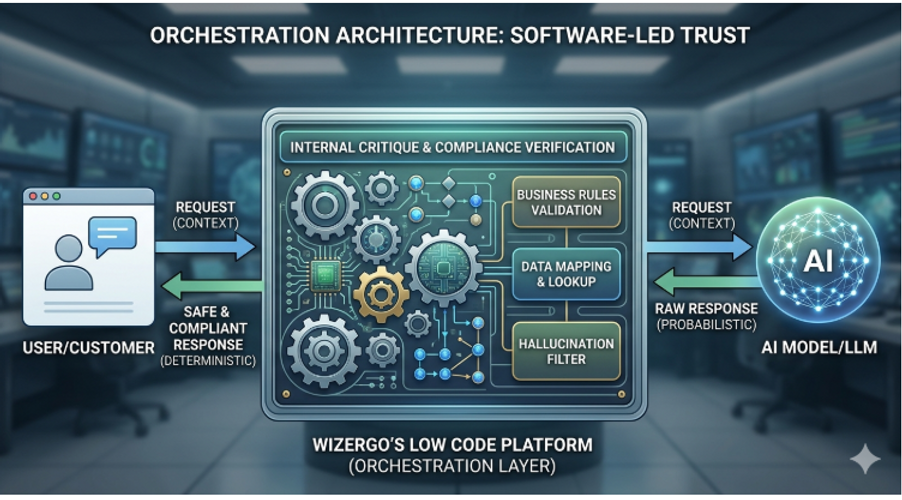
Of course, conversational AI doesn't mean underwriting should become an uncontrolled conversation. The system still needs clear objectives, predefined boundaries and appropriate governance. AI should provide flexibility in how information is collected while remaining controlled in what information needs to be captured.
The future of underwriting, therefore, may not be about choosing between questionnaires and AI. It may be about moving from static questionnaires to intelligent, goal-driven conversations.
Questionnaires will continue to have a role, but the next generation of underwriting can go beyond asking everyone the same questions in the same sequence.
The real opportunity is not to ask applicants more questions. It is to ask better questions — at the moment they become relevant.
Because the future of insurance underwriting may not be a better questionnaire.
It may be a better conversation.