Medical underwriting helps insurers understand an applicant's health history, evaluate risk, and make informed decisions before issuing a policy.
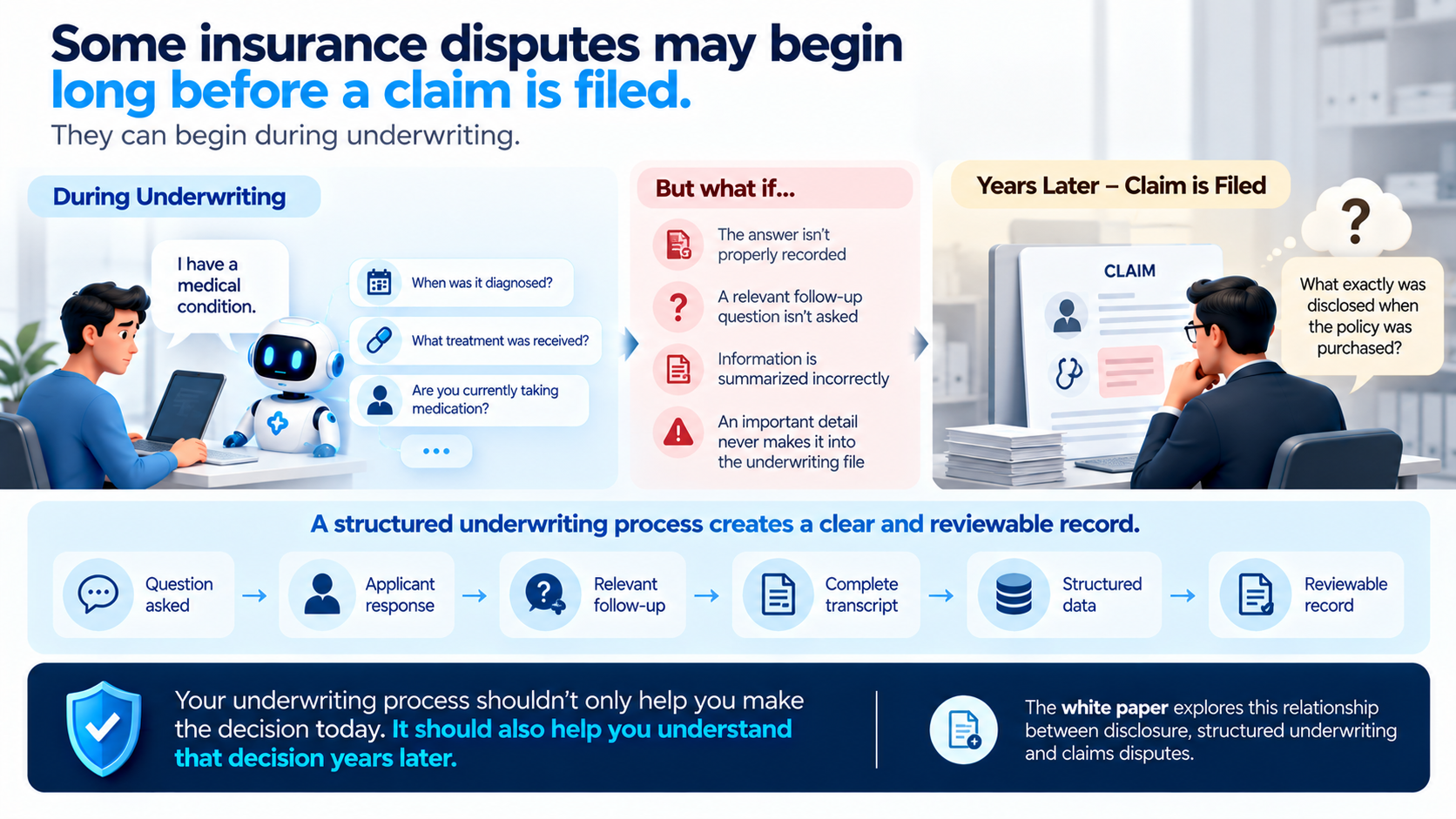
But what happens when important medical information is missed, inaccurately recorded, or never explored through the right follow-up questions?
The consequences may not appear immediately. They can surface much later, when a policyholder files a claim and questions arise about information that was not fully disclosed during the application process.
This is why the quality of medical underwriting matters far beyond the point of policy issuance.
How Weak Underwriting Can Lead to Claims Disputes
Incomplete or inaccurate disclosure can create uncertainty for both insurers and policyholders. If a relevant medical condition or health detail was not properly captured during the application, questions may arise when a claim is assessed.
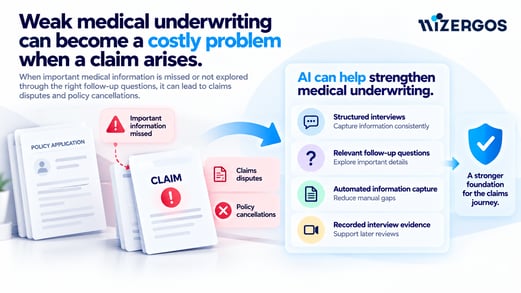
Depending on the circumstances and applicable policy terms, this can lead to claims disputes, complications, or policy cancellation.
The challenge is not simply whether an applicant provided information. It is also whether the interview process consistently asked the necessary questions, explored relevant answers, and accurately documented the information collected.
Why Can Traditional Medical Interviews Leave Gaps?
Several challenges can affect the completeness and consistency of information collected during medical underwriting.
1. Inconsistent questioning
When interviews depend heavily on individual interviewers, the questions asked and the depth of follow-up may vary between applicants. Important details may not always receive the same level of attention.
2. Missed follow-up questions
An applicant's initial answer may reveal information that requires clarification. If the appropriate follow-up question is not asked, relevant details can remain incomplete.
3. Manual transcription and reporting
In conventional interviews, the interviewer listens to the applicant, takes notes, and prepares a report. Details can be lost or misremembered between the original response and the final record.
4. Limited visibility into the interview
When interviews are conducted by external vendors, insurers may have limited visibility into how questions were asked, how sensitive information was handled, and whether the applicant's responses were adequately explored.
5. Gaps in reviewable evidence
Without a reliable record of the conversation, it can be difficult to establish precisely what was asked, what the applicant disclosed, and whether additional clarification was sought.
Together, these challenges can make underwriting evidence less consistent and harder to review when questions arise during the claims process.
How AI-Assisted Medical Interviews Can Help
AI-assisted medical interviews offer an opportunity to improve how medical information is collected, structured, and documented.
Structured information capture
An automated system can capture responses directly into structured fields rather than relying entirely on handwritten notes or manually prepared summaries. This can reduce dependence on manual transcription and make information easier to review.
Relevant follow-up questions
AI-driven interview flows can use an applicant's responses to trigger relevant follow-up questions. When appropriately configured and validated, this helps ensure that important details are explored more consistently.
Recorded and reviewable evidence
A recorded interview can provide a reviewable account of the questions asked and responses given, subject to appropriate consent, privacy safeguards, and retention policies.
If a dispute arises, this record can help insurers examine what was discussed during the original application. A recording does not guarantee that every answer is accurate, but it can provide useful context for reviewing the disclosure.
Consistent interview execution
Automated workflows can apply predefined interview structures and follow-up logic across applicants. This helps reduce variation caused by differences in how individual interviews are conducted.
Better auditability
Structured records and reviewable interview evidence can support internal quality checks and help insurers understand how information was collected.
Building Stronger Underwriting Evidence
The objective of AI-assisted medical underwriting is not simply to conduct interviews faster. It is to help insurers build a more consistent and reviewable record from the beginning of the policy journey.
By combining structured information capture, relevant follow-up questions, and recorded interview evidence, insurers can strengthen their underwriting processes and improve their ability to review disclosures later.
These capabilities cannot eliminate every claims dispute. Outcomes still depend on the information provided, the underwriting rules applied, the policy terms, and the circumstances of each claim.
However, improving information collection and documentation at the application stage can help reduce avoidable gaps and provide a clearer basis for reviewing what was disclosed.
Conclusion
Claims disputes can expose weaknesses that originated much earlier in the insurance journey. Incomplete disclosures, inconsistent questioning, and documentation gaps can create uncertainty for insurers and policyholders alike.
AI-assisted medical interviews offer a way to strengthen this process through structured information collection, consistent follow-ups, and reviewable records.
Better underwriting begins with better information — and better information begins with asking the right questions, capturing answers accurately, and preserving a clear record of the conversation.
At Wizergos, we see AI-assisted medical underwriting as an opportunity to help insurers improve consistency, strengthen underwriting evidence, and create a more transparent insurance journey.