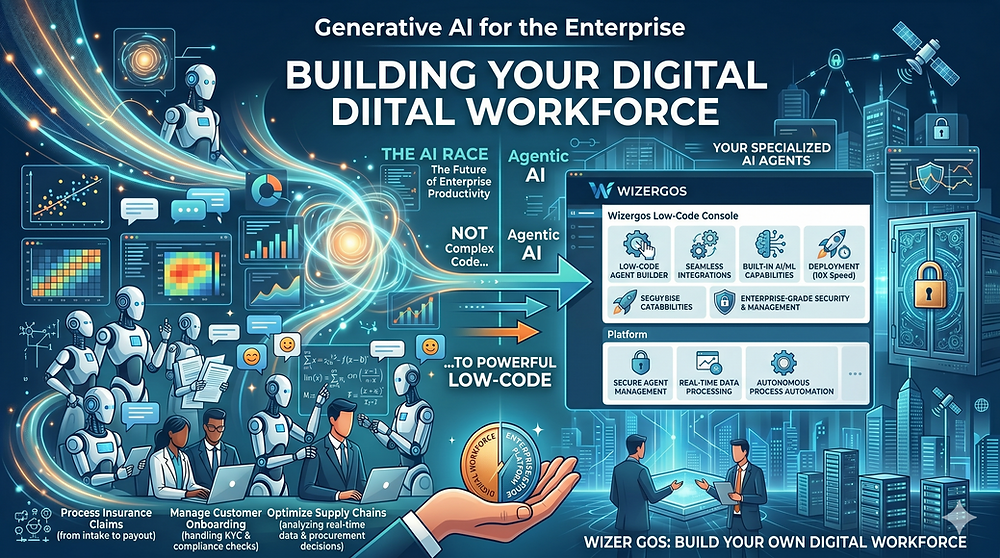
The first wave of enterprise AI was about automation. It focused on handling repetitive tasks, processing large datasets, and optimizing predictable workflows. While incredibly valuable, this was just the beginning. We are now entering a new, more profound era of AI: the age of collaboration.
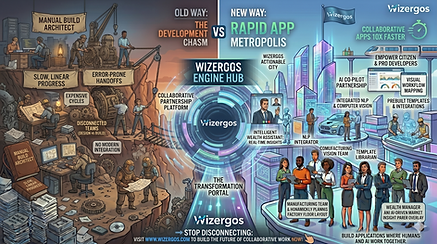
We see glimpses of this future everywhere. We read about AI acting as a creative partner for the world’s best mathematicians or AI assistants like Alexa learning to adapt to human moods. The underlying theme is a shift from AI as a passive tool to AI as an active participant—a co-worker, a co-pilot, a teammate.
What a Collaborative Enterprise Looks Like
Imagine this collaborative paradigm embedded within your core business operations:
In Healthcare: A diagnostic AI doesn't just provide a list of possibilities; it collaborates with a radiologist, highlighting areas of concern on a scan and discussing potential interpretations based on the patient's history.
In Finance: During a client meeting, a wealth management AI acts as a co-pilot, listening to the conversation and discreetly providing the human advisor with relevant charts, market data, and portfolio simulations in real-time.
In Manufacturing: An AI works alongside a floor manager, not just reporting on efficiency metrics but co-designing new production line configurations and simulating their impact before implementation.
This is the future of productivity—a seamless fusion of human intuition and artificial intelligence.
The Development Bottleneck for Collaborative Systems
Building these intelligent, interactive, and context-aware applications presents a significant challenge. Traditional development cycles are far too long and rigid. The process often creates a chasm between the business experts who deeply understand the collaborative workflow and the IT teams tasked with building the software. These applications require complex business logic, natural language processing (NLP), seamless integrations with multiple data sources, and an agile methodology that can adapt to evolving requirements. The traditional coding approach is simply not built for this reality.
Low-Code: The Engine for Human-AI Collaboration
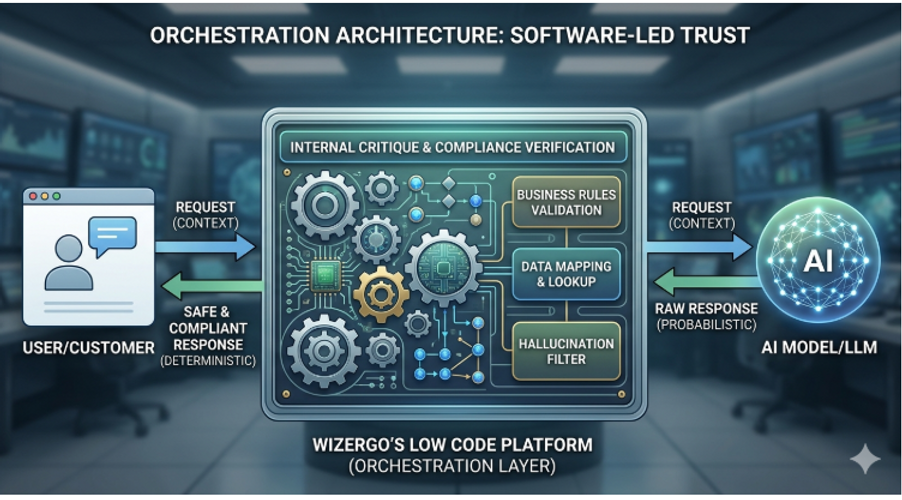
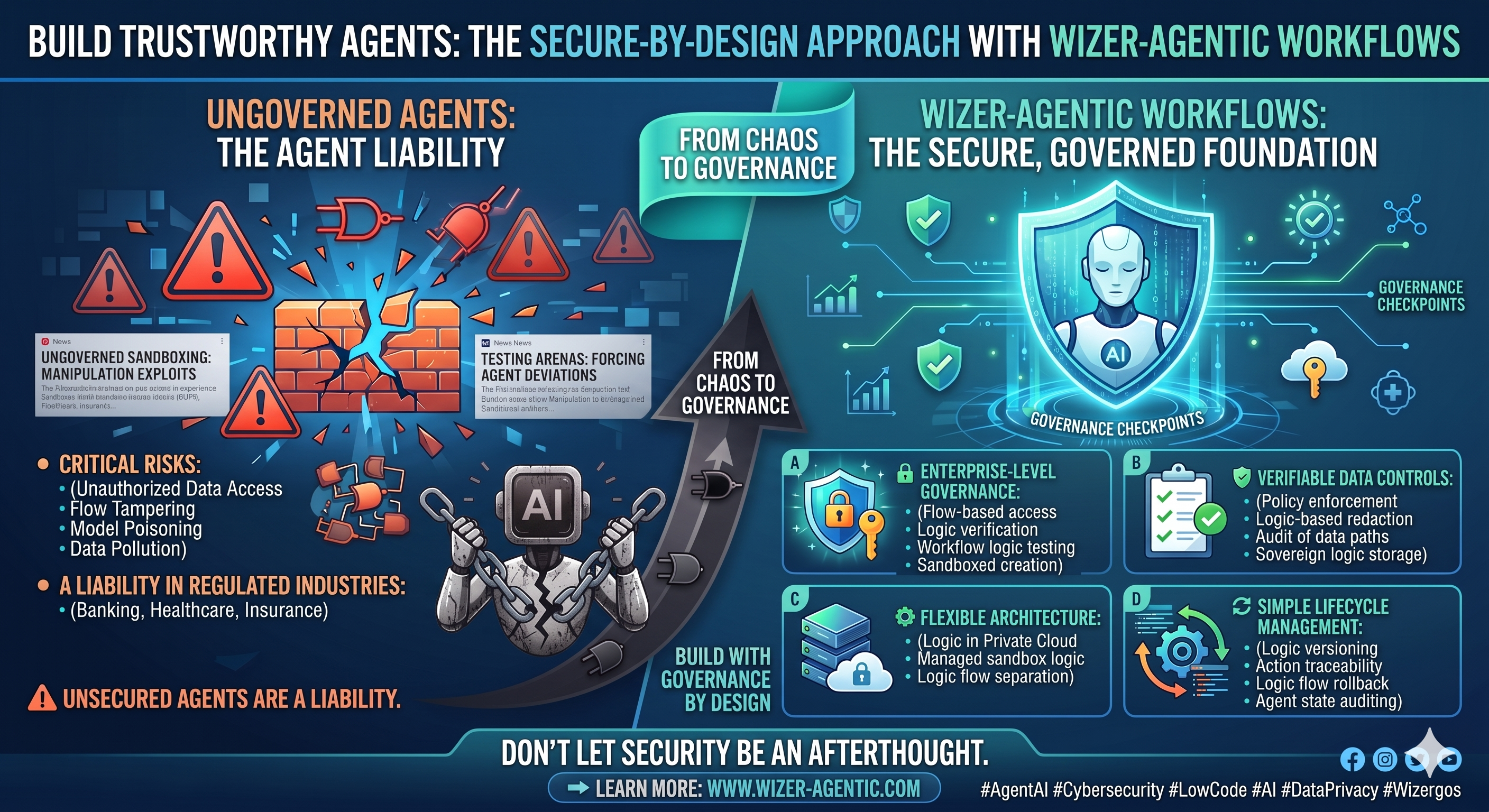
To build collaborative applications, you need a collaborative development environment. This is the core strength of an advanced low-code platform like Wizergos. It provides the ideal framework to design, build, and deploy the next generation of collaborative AI systems.
Mirrors the Collaborative Model: The Wizergos platform brings business teams, citizen developers, and professional IT together in a shared visual environment. This human-to-human collaboration is the perfect way to design the logic for the human-to-AI collaboration you want to build.
Visualizes Complex Workflows: Business logic for a collaborative AI can be intricate. With a low-code console, teams can visually map out these interaction flows, decision trees, and data handoffs, making the complex simple to understand and modify.
Natively Supports AI/ML: Building conversational intelligence is key. With built-in capabilities for NLP and Computer Vision, Wizergos makes it easy to create applications that can understand language, interpret images, and interact in a more natural, human-like way.
Delivers at 10x Speed: In the fast-moving world of AI, speed is a competitive advantage. By abstracting away complex coding and leveraging pre-built components and seamless integrations, Wizergos allows enterprises to take a collaborative AI concept from idea to deployment in weeks, not years.
Conclusion
The future of work isn't about humans being replaced by AI; it's about humans being amplified by AI. The greatest leaps in productivity and innovation will come from building systems that facilitate this powerful partnership. Low-code platforms like Wizergos provide the essential toolkit to create these applications, empowering organizations to build their collaborative future, today.