For years, the gold standard for enterprise software was reliability and functionality. Did the application perform its core task without errors? If so, it was considered a success. But the landscape is changing. The rise of sophisticated consumer AI, exemplified by news like Amazon's Alexa Plus learning to adapt its responses to a user's mood, has fundamentally shifted expectations. Users now expect more than just functionality; they expect intelligence, personalization, and empathy from their digital tools—both at home and at work.
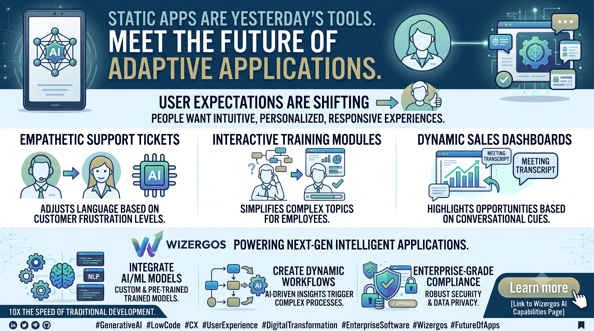
This new paradigm requires a move away from static, one-size-fits-all applications towards what we might call 'sentient' or 'adaptive' applications. These are systems that can understand context, interpret user intent, and modify their behavior and interface in real time to better serve the user's needs.
What Does an Adaptive Application Look Like in the Enterprise?
This isn't just about a friendlier user interface. It's about building fundamentally smarter systems that drive real business outcomes. Consider these scenarios across different industries:
1. Healthcare: A patient-facing portal, built with adaptive technology, could analyze a patient's message about their symptoms. If the language suggests high levels of anxiety or pain, the system could automatically escalate the case, provide calming resources, and use a more reassuring and simplistic tone in its automated responses.
2. BFSI: A wealth management application could analyze a client's portfolio and recent market news. Instead of just showing data, it could present a personalized summary using natural language, adjusting its tone from optimistic to cautious based on the market outlook and the client's documented risk tolerance.
3. Retail: An e-commerce platform for B2B clients could monitor a buyer's navigation patterns. If the user seems stuck or is repeatedly comparing two similar products, a proactive chat assistant could intervene, offering a detailed comparison or connecting them with a sales expert, effectively personalizing the sales journey.
In each case, the application is moving beyond its role as a passive tool and becoming an active, intelligent partner in the user's workflow.
The Challenge: Bridging AI Power with Enterprise Reality
While the potential is immense, implementing these intelligent features has traditionally been a monumental task, requiring specialized AI talent, lengthy development cycles, and complex integrations with legacy systems. For most organizations, this has made building adaptive applications prohibitively expensive and slow.
This is where the synergy of low-code and Generative AI becomes a game-changer. A low-code platform like Wizergos acts as the perfect bridge, democratizing access to advanced AI capabilities and providing the framework to deploy them securely within an enterprise context.
Here’s how Wizergos makes it possible:
1. Simplified AI/ML Integration: The platform provides built-in capabilities to build, test, and deploy AI/ML models. This means you can easily incorporate natural language processing (NLP) for sentiment analysis or computer vision for data extraction without needing a dedicated team of data scientists for every project.
2. Agile Workflow Automation: An adaptive application requires dynamic back-end logic. With Wizergos's visual workflow builder, you can design complex business processes that change based on AI-driven triggers. For example, if sentiment analysis detects an angry customer, the workflow can automatically route the ticket to a senior support agent.
3. Secure and Scalable Foundation: Innovation cannot come at the cost of security and compliance. Wizergos is built with enterprise-grade security, data privacy, and seamless integration capabilities at its core. This ensures that as you build more intelligent applications, you are doing so on a foundation that your CISO can trust.
The era of static enterprise software is over. The future belongs to applications that are not just functional, but are truly adaptive to the humans they serve. With Wizergos, your organization has the power to build this future at 10x the speed, turning the promise of Generative AI into a practical, value-driving reality.